

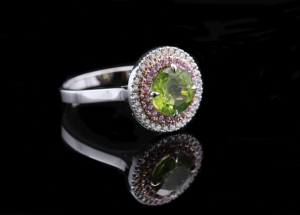
Natural or Lab-Grown Diamond?
Natural and lab-grown diamonds are fundamentally the same material in terms of their basic chemical composition: crystallised carbon.
The main difference is how they are formed.
A natural diamond forms within the Earth through natural geological processes, while a lab-grown diamond is created in a controlled environment using technology that allows a diamond crystal to grow.
A lab-grown diamond is therefore not a diamond imitation such as cubic zirconia or other substitutes.
It is a diamond, but it does not have a natural geological origin.
How Is a Natural Diamond Formed?
Natural diamonds form deep within the Earth’s mantle under extremely high temperatures and pressures.
Geological processes later transport them closer to the Earth’s surface, where they can be mined from diamond deposits.
What makes natural diamonds special is their natural origin and geological rarity.
For centuries, this has made natural diamonds some of the most highly valued gemstones in the world.
How Is a Lab-Grown Diamond Made?
Lab-grown diamonds can be produced using different technological processes.
The two best-known methods are HPHT and CVD.
Both aim to create conditions in which carbon can grow into a diamond crystal structure.
The resulting crystal is then cut and polished in much the same way as a natural diamond.
Can You See the Difference with the Naked Eye?
In a high-quality natural and lab-grown diamond, usually not.
Both have the characteristic optical properties of diamond and both can display strong brilliance.
Reliable identification may require gemmological equipment and professional analysis.
For this reason, the origin of the diamond should always be clearly stated when purchasing.
For larger or more significant diamonds, an appropriate gemmological certificate is also recommended.
What Does 4C Mean?
A similar grading system is used for both natural and lab-grown diamonds.
Carat – Weight
Carat is the unit used to measure the weight of a gemstone.
1 carat equals 0.2 grams.
A higher carat weight generally means a larger diamond, but the physical dimensions also depend on the shape and proportions of the cut.
Color – Colour
Colourless diamonds are graded according to the presence or absence of colour.
Diamonds with less noticeable yellow or brown tones generally receive higher colour grades.
Clarity – Purity
Diamonds can contain internal characteristics known as inclusions.
Clarity describes their number, size, position and visibility.
Cut – Quality of the Cut
Cut is one of the most important factors affecting the appearance of a diamond.
A well-cut diamond reflects light efficiently back towards the viewer, creating brightness and sparkle.
The Biggest Difference Is Often the Price
Lab-grown diamonds are generally much more affordable than comparable natural diamonds.
This means that with the same budget, you can often choose a larger lab-grown diamond or one with higher specifications.
With a natural diamond, part of the price reflects its natural origin and rarity.
For this reason, the comparison is not simply about which diamond looks better.
It is also about how much the natural origin of the gemstone matters to the buyer.
Do Lab-Grown Diamonds Hold Their Value?
This is an important question.
The purchase and resale prices of lab-grown diamonds have changed significantly as production technology has developed.
Because they can be manufactured and production continues to become more efficient, lab-grown diamonds should generally not be viewed as an investment.
Jewellery containing natural diamonds should not automatically be considered a traditional financial investment either. However, a high-quality natural diamond has a different type of rarity and a different secondary market compared with a lab-grown stone.
If your main priority is to obtain a large and visually impressive diamond for a certain budget, a lab-grown diamond can be an attractive option.
If natural origin, geological history and rarity are important to you, a natural diamond is the more logical choice.
Which Is Better for an Engagement Ring?
There is no single answer that is right for everyone.
A natural diamond is a good choice for someone who values natural origin, rarity and the geological history of the stone.
A lab-grown diamond may appeal to someone who wants a larger diamond or higher specifications for a lower budget.
From a visual perspective, both can be beautiful.
The decision is mainly about personal values, preferences and budget.
A Lab-Grown Diamond Is Not Cubic Zirconia
This is one of the most common misconceptions.
Cubic zirconia is a completely different material.
A lab-grown diamond, however, has a diamond crystal structure and the physical properties of diamond.
For this reason, the term “synthetic diamond” can sometimes create the wrong impression, as though the stone were simply an imitation.
The more accurate term is lab-grown diamond or laboratory-grown diamond.
What About Certification?
For a significant diamond, a certificate is highly recommended.
A gemmological laboratory records the main characteristics of the diamond, including weight, dimensions, colour, clarity and cut.
For a lab-grown diamond, the certificate should also clearly state that the diamond was created in a laboratory.
When choosing a stone, it is therefore important to review both its specifications and its documentation.
What Should You Look for When Buying a Diamond?
Do not focus on only one number or grade.
A diamond with a higher clarity grade is not automatically more beautiful than every diamond with a slightly lower clarity grade.
The same applies to colour.
The quality of the cut and the overall balance of characteristics have a major influence on the final appearance.
With an engagement ring, it is also important to consider how the diamond is set and how its proportions work with the design of the ring.
Frequently Asked Questions
Is a lab-grown diamond a real diamond?
Yes. It is a diamond with the same basic chemical composition and crystal structure, but it is grown in a laboratory.
Does a lab-grown diamond sparkle in the same way as a natural diamond?
A high-quality lab-grown diamond has the optical properties of diamond and can appear equally brilliant.
Why is a lab-grown diamond less expensive?
Because it does not have the same natural geological rarity, and production technology continues to improve.
Which diamond do you recommend for an engagement ring?
It depends on your priorities. If natural origin and rarity are important, choose a natural diamond. If you want the largest or highest-quality stone possible for a specific budget, a lab-grown diamond may be an attractive choice.
Do I need a certificate?
For larger and more valuable diamonds, a certificate is strongly recommended.
Natural or Lab-Grown – The Choice Is Yours
There is no need to look for one universal winner when choosing between a natural and a lab-grown diamond.
The first question should be what matters most to you: natural origin, size, quality, price, or a combination of these factors.
At Zlatarski atelje Mengeš, we can explain the individual characteristics of a diamond and help you choose a gemstone that suits both the desired ring and your budget.30


